
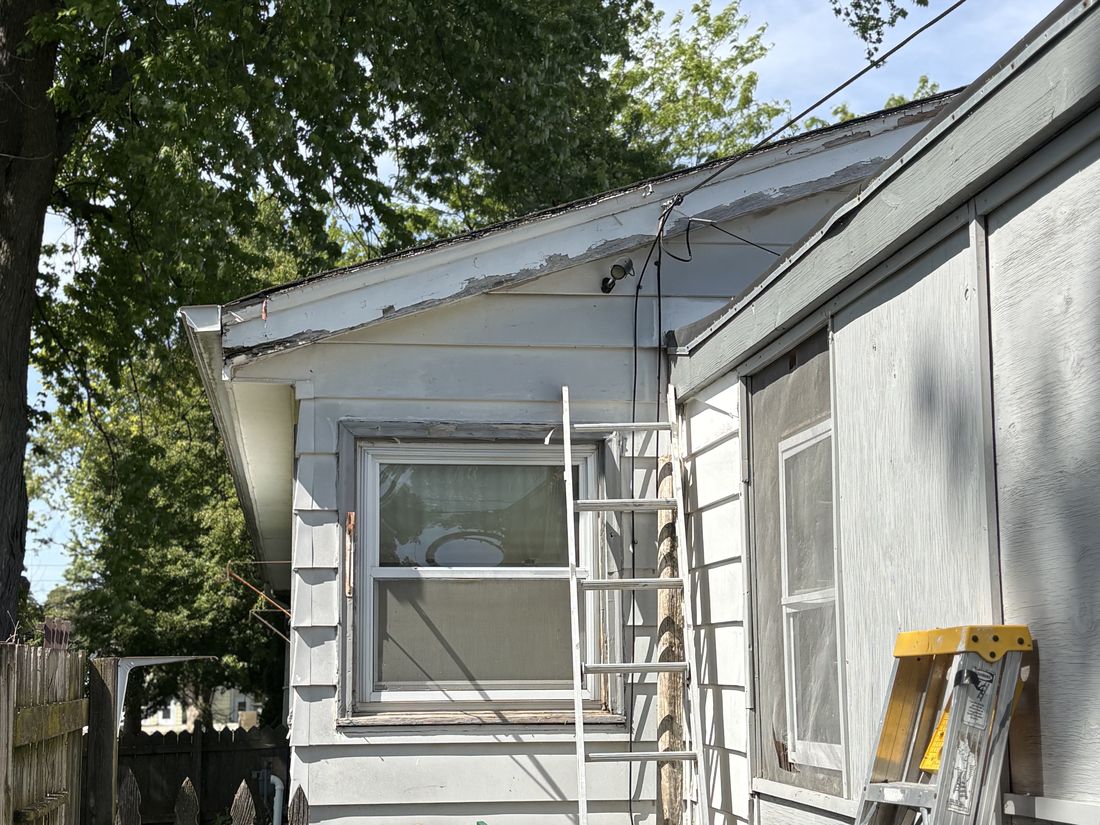
Few pieces of mail land harder than an envelope from the City of Milwaukee's Department of Neighborhood Services. Inside is an order listing conditions at your house and a date by which they have to be fixed. If you were already thinking about selling — because the repairs are past what you can take on, because the house is a rental you're done with, or because you inherited a property that hasn't been touched in a decade — the order suddenly makes the decision urgent.
Here's the good news: an open code violation does not stop you from selling a house in Milwaukee. What it changes is who can buy it, what you have to disclose, and what gets paid at the closing table. This guide walks through how DNS orders work, what they cost when they're ignored, the point-of-sale rule that catches a lot of Milwaukee sellers off guard, and the three realistic paths out.
The city's file follows the house, not you. Selling doesn't erase an order to correct — the next owner takes on the obligation to fix the conditions — and any unpaid city charges follow the property too, as special charges on the property tax bill. That means an open violation is a price-and-buyer problem, not a legal blocker. Be honest about it, and it's workable.
What a Milwaukee Code Violation Order Actually Is
Milwaukee's Department of Neighborhood Services — DNS — enforces the city's building, housing, and property-maintenance codes. An inspection can start from a neighbor's complaint, a call to the city, a rental inspection, or an inspector noticing something from the street. What comes out of it is an order to correct.
An order to correct is a legal document. It names the specific conditions that violate the code and sets a time limit for completing the work, and that time limit is set by the severity of the condition and the inspector's judgment — a loose handrail and a failing roof are not on the same clock. On Milwaukee's older housing stock, the items that show up over and over are familiar:
- Exterior deterioration — peeling paint, rotted soffit and fascia, failing porch steps, a garage that's leaning.
- Roof and water problems — an aging roof, damaged flashing, and the interior damage that follows.
- Life-safety items — missing smoke and carbon monoxide detectors, blocked egress, unsafe wiring, no heat.
- Property maintenance — debris, overgrowth, boarded windows, unsecured vacant buildings.
Milwaukee's code history is also public. Buyers, agents, and investors look a property up before they write an offer, which is a good reason to know exactly what's in your own file before you list. The Residential Code Enforcement section can be reached at (414) 286-2268, and asking for a plain-language read of your orders is free.
What Happens If You Don't Comply
DNS is not primarily trying to collect money — it wants the conditions corrected, and orders get reissued when they aren't. But ignoring an order does get expensive, in a specific order of operations:
- Re-inspection fees. Inspectors allow a set number of free re-inspections. After that, the published charge is $150 for the first failed re-inspection and $300 for each one after that on residential property; commercial re-inspections run $200 and $400. Letters go out for each charge.
- Citations and Municipal Court. Orders that stay open get referred for enforcement, and prosecution is normally handled in Municipal Court, where fines can be levied.
- The tax bill. This is the one people underestimate. Property-related municipal fees that go unpaid are placed on the property tax bill as special charges. Fees unpaid by the annual taxroll closing in October are added to the annual bill, and charges still outstanding by mid-November may be added and then collected as a tax under Wisconsin statutes.
Special charges and assessments cannot be appealed, negotiated, or compromised once they've been placed on the bill. And because they're now collected as property tax, falling behind on them puts you on the front end of Milwaukee County's in-rem tax foreclosure process — the same track we lay out in our Milwaukee County tax foreclosure guide. A few hundred dollars in ignored re-inspection fees is how that story usually starts.
You Can Appeal an Order — But the Clock Is Short
If you believe an order is wrong — the inspector misread the condition, the code section doesn't apply to your building, the requirement is impossible as written — Milwaukee's Standards and Appeals Commission hears appeals from decisions of the Commissioner of Neighborhood Services on how the building code is applied and interpreted.
Two timing details matter. Appeals are generally filed in writing, on a Notice of Appeal form, within 30 days after you receive the written order or decision. And the commission works on a monthly calendar: an appeal has to be in by the first Thursday of the month to make that month's agenda. The commission office is at (414) 286-2503.
Deadlines do vary by ordinance and are normally printed on the notice itself — read the order you were sent before relying on any general rule, including this one. And be realistic about what an appeal is for: it's the place to argue the code call, not a way to buy open-ended time. If the real problem is that you can't fund the repairs, say that to the inspector and ask about the compliance deadline instead — then start weighing the options further down this page.
Milwaukee's Point-of-Sale Certificate of Code Compliance
This is the requirement most Milwaukee sellers have never heard of until it shows up in the middle of a transaction. Milwaukee has a Certificate of Code Compliance tied to the sale of certain residential property. A certificate is required at the time of sale for:
- All non-owner-occupied one- and two-family dwellings, citywide. In a city built on duplexes, that sweeps in a very large number of sales — including most landlord exits.
- All owner-occupied one- and two-family dwellings inside the six designated code compliance areas. Requirements vary by neighborhood, so the address decides.
An inspection is conducted before the certificate is granted, and the fee may be added to the property taxes. Per the city's own guidance, it is the seller's duty to inform prospective buyers that the requirement exists, while it is the buyer's responsibility to obtain the certificate. The general exceptions are properties sold to government agencies and properties held by a trustee or other person acting under the direction of a court.
The practical takeaway: if you own a Milwaukee rental or a duplex you no longer want to run, an inspection is very likely part of your sale, and it will surface anything the city hasn't already cited. If that's your situation, our guide to selling a rental property in Milwaukee covers the tax side of the same decision. Because the rules turn on the specific address and its occupancy status, confirm yours with DNS at (414) 286-3838 before you sign anything.
What You Have to Tell a Buyer
Wisconsin requires most residential sellers to complete a Real Estate Condition Report disclosing the defects they know about. The mechanics are strict:
- The owner must furnish the report no later than 10 days after acceptance of the contract of sale or option contract.
- A buyer who doesn't receive it may rescind within 2 business days after that 10-day period and is entitled to the return of deposits or option fees paid.
- The duty applies to transfers that aren't exempt from Wisconsin's real estate transfer fee, with exceptions that include personal representatives, trustees, and conservators who never occupied the property — which is why many estate sales are handled differently.
Selling "as-is" doesn't switch this off. As-is describes what you're willing to repair; the condition report describes what you know. A dated city order sitting in a public file is about as documented as a known defect gets, and a buyer who finds it after closing has a much better story than one who was told upfront. The report is a disclosure, not a warranty — and disclosing an open order rarely kills a deal with the kind of buyer who was going to close anyway.
Your Three Options When the City Has Cited Your House
An order to correct leaves you with three realistic choices. The deciding factors are usually your bank balance and the compliance date on the order, more than the violation itself.
| Option | Best When | The Catch |
|---|---|---|
| Correct the orders, then list | The items are cosmetic or cheap, and you can fund them | Contractor scheduling can outrun your compliance deadline |
| List as-is on the open market | The house is otherwise sound and you can wait out a longer sale | Financed buyers and their appraisers are the constraint, not the city |
| Sell direct to a cash buyer | You want the deadline, the repairs, and the charges off your plate | Our price accounts for the repairs and charges we take on |
Correcting first is the best answer when the list is short. Peeling trim, a handrail, detectors, and hauling debris are not a renovation — they're a weekend and a dumpster, and clearing them removes the whole problem before you go to market. Where it stops working is when the orders reach the roof, the electrical service, or the structure. Our breakdown of selling as-is versus renovating first in Milwaukee runs that math repair by repair.
Listing as-is can work, but understand where the friction actually is. The city isn't blocking your closing; the buyer's lender is. Government-backed loans carry minimum property standards, and appraisers routinely call out peeling paint, roof condition, and unsafe steps — the very items DNS writes up. That's why cited houses so often go under contract and then unravel weeks later. We've watched it happen: a West Allis duplex that lost three months to a buyer whose financing collapsed while the damage inside got worse the whole time.
Got an Order With a Deadline on It?
We buy houses across Milwaukee & Southeast Wisconsin as-is — open code violations included. No repairs, no re-inspections to chase, and city charges settled at closing.
If the House Is Condemned or Under a Raze Order
At the far end of the enforcement ladder, a building can be condemned and placarded — meaning it can't legally be occupied — and in the worst cases the inspector orders it razed. If the owner doesn't comply with a raze order, the city can do the demolition itself and assess the costs against the property: preliminary costs such as the title search, service of the order and publication, plus the actual demolition and seeding.
That's the outcome worth working hard to avoid, because it's the one where you lose the structure and still owe the bill — secured against a now-vacant lot. A house that's condemned still has value: the land has value, the location has value, and to an investor the shell often does too. What it doesn't have is time. If you're anywhere near this stage, selling before the city acts almost always preserves more than waiting does. The same urgency logic applies if you're behind on the mortgage, which we cover in our guide to the Wisconsin foreclosure process.
How an As-Is Cash Sale Handles a Cited House
A cash sale is not the answer for every cited house. When the order list is long or the deadline is close, though, it takes care of the specific problems DNS creates:
- The repairs stop being yours. We buy as-is, with the orders open. We're the ones who pull permits and do the corrections after closing, which is a normal part of what we do to every house we buy.
- The charges get cleared at closing. Title pulls the municipal balance, and unpaid fees and special charges are paid out of the proceeds. The debt doesn't follow you.
- No lender, no appraisal. The condition that would sink a financed sale is not an obstacle to a cash close, so the deal doesn't die three weeks in.
- The deadline stops mattering. A closing date you control beats a compliance date you don't. We can move fast when there's a re-inspection or a court date on the calendar.
- No cleanout. Leave what you don't want. If the house is full — as in our Cudahy ranch with three layers of shingles and a basement of tools — that's our problem, not yours.
We'll also tell you when it isn't the right move. A short list of minor orders, plus the money and time to fix them, usually means listing will leave you with more. To check our number against that, see the worksheet behind a cash offer and our chart of cash, agent and iBuyer sales.
When the compliance date will arrive before you can get the work done, call us. We buy cited houses in Milwaukee, West Allis and the other nearby suburbs, open orders and all, and we're glad to look at the orders with you before you decide anything. Our sell-as-is page explains how an as-is purchase works, the FAQ page covers the quick logistics, and you can reach us directly at (414) 400-6116.