
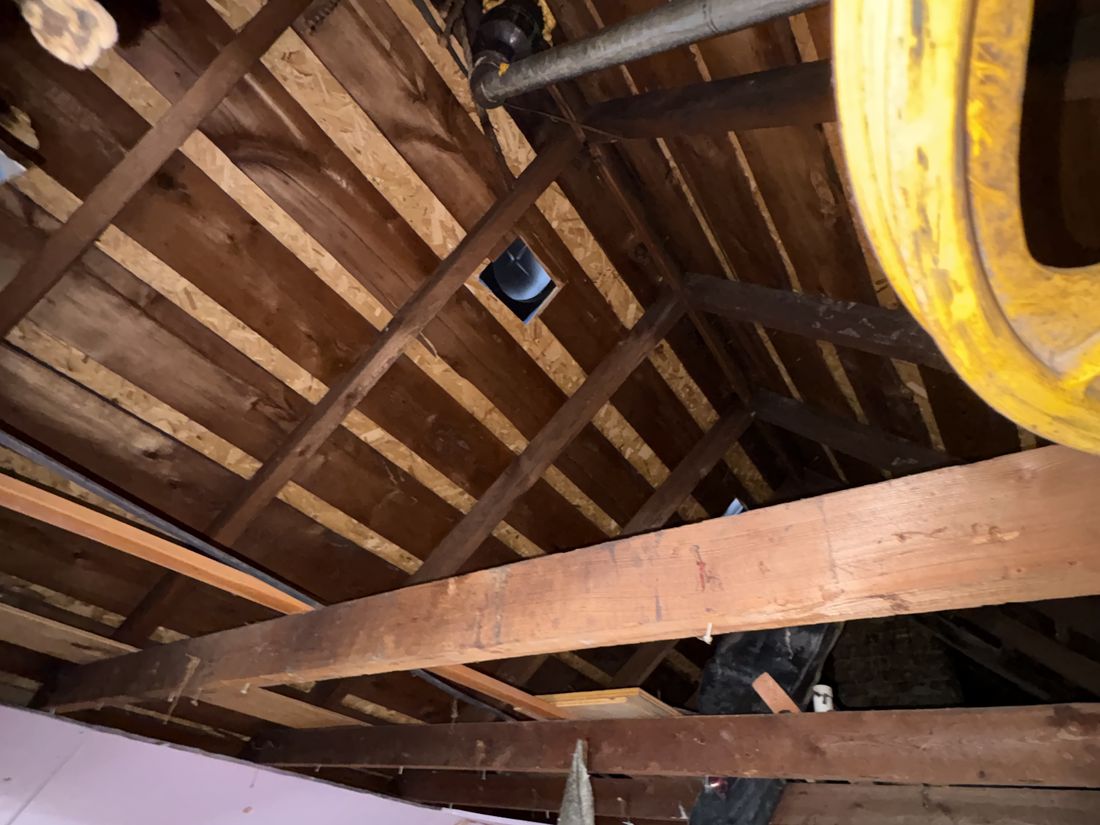
A house fire does not end on the night the trucks leave. For most Milwaukee owners, that is when the second, slower emergency starts: an adjuster's schedule, a boarded-up front window, a mortgage payment still due on a house nobody can live in, and a stack of paperwork that assumes you already know how Wisconsin insurance law works.
There is also one rule almost nobody sees coming. Inside the City of Milwaukee, state law requires insurers to hold back part of a large fire settlement on many properties until the city confirms the building has been repaired or cleared. It does not apply in Wauwatosa, West Allis, or anywhere else in the metro, and it changes the math on whether to rebuild or sell. This guide walks through that rule, the raze-order process, the insurance deadlines that quietly run out, and what your realistic options are if you decide you do not want to rebuild at all.
You do not have to repair a fire-damaged house before you sell it, and you do not have to wait for the insurance claim to finish either. The claim and the sale are two separate tracks. What matters is keeping both of them moving — because the insurance clock, the city's clock, and your mortgage clock are all running at the same time.
The First Days After the Fire
Before any decision about selling, a few things have to happen, and doing them in the right order protects both the claim and the sale price.
- Report the claim right away and get the claim number in writing. Every later step — the adjuster's inspection, the proof of loss, any money withheld — hangs off that number.
- Secure the building. Your policy almost certainly requires you to protect the property from further damage, and an open, fire-damaged house is exactly what the city's inspectors look for. If a building is not kept secure, the Department of Neighborhood Services can require it to be boarded under the Milwaukee Code of Ordinances.
- Photograph everything before anything is thrown out — every room, the contents, the roof, the basement. Water from the hoses often does as much damage as the fire itself, and it is easy to lose track of once cleanup starts.
- Watch the vacancy clock. If nobody can live in the house, Milwaukee's Vacant Building Registration ordinance requires owners of property left vacant for 30 days or more to register it with DNS and keep it secure and maintained.
- Do not sign anything a stranger hands you — not a repair contract, not an assignment of your insurance benefits, and not a purchase agreement. More on why below.
Milwaukee's Fire Insurance Holdback — a City-Only Rule
Wisconsin Statutes §§ 632.10 to 632.104 set up a property insurance escrow that applies only to real property in a 1st class city. Under § 62.05, that is a city of 150,000 or more that has formally changed class — and Milwaukee is the only Wisconsin city that has. A fire in Greenfield, Oak Creek, or Brookfield is not covered by these sections at all. A fire on the north side or in Bay View is.
Under § 632.102(1), the insurer must withhold part of the final settlement when both of these are true:
- The final settlement for the building is more than 50 percent of the total limits of all policies covering it, and
- The total insurance on the building is at least $5,000.
The amount withheld under § 632.102(2) is the greater of 25 percent of the final settlement, or the lesser of $7,500 and the building coverage limit. "Final settlement" only counts money for the structure itself — contents, loss of use, and liability payments are excluded under § 632.10(3).
A hypothetical to show how that works: a building insured to $100,000 settles for $60,000. That is more than half the limit, so the holdback applies. Twenty-five percent of $60,000 is $15,000, which is greater than $7,500 — so $15,000 is withheld and $45,000 is paid out.
Under § 632.101(2)(b), the holdback does not apply to a one- or two-family home that the named insured occupies as a principal residence, if the owner gives proof of occupancy — a valid Wisconsin driver's license to the insurer, or documentation the city accepts. That means the rule lands hardest on exactly the properties most likely to be sold after a fire: rentals, vacant houses, and homes held by an estate.
The 90-Day Clock: How Withheld Money Gets Released
Within 10 days of withholding, the insurer has to send written notice to the city's building inspection official, to you, and to any mortgage lender named on the policy (§ 632.102(3)). That notice starts a clock for the city, not for you.
To keep any claim on the money, the city must — within 90 days after the notice is delivered — either start proceedings under the raze statute or a nuisance-abatement law, or get a signed release from the owner consenting to demolition (§ 632.103(1)). From there, one of three things happens:
- The city does nothing in time. If it misses the 90 days, or fails to notify the insurer that proceedings started, the withheld money goes to you and the other interests named in the policy.
- The house is repaired or the site is cleared. Once a city inspector verifies the damaged portions were repaired to code, or that the structure and all remnants were removed and the site restored to a dust-free, erosion-free condition, the insurer releases the funds (§ 632.103(3)).
- The city demolishes or abates. The city can be reimbursed from the withheld funds for its actual demolition or abatement costs plus reasonable administrative costs — but only after sending an itemized statement to the insurer and to you. Anything not needed goes back to you (§ 632.103(2)).
The practical point for a seller: if you sell the house before it is repaired, that withheld money may sit untouched until someone — usually the buyer — finishes the work. That needs to be dealt with in the purchase agreement, not discovered after closing.
When the City Decides the House Isn't Worth Repairing
Wisconsin's raze statute, § 66.0413, lets a building inspector order a building that is so damaged it is dangerous, unsafe, or unfit for habitation to be razed — or, if reasonable repairs can make it safe, give the owner the choice of repairing or razing. The statute includes a presumption that matters enormously after a fire: if the cost of repairs would exceed 50 percent of the building's assessed value (adjusted by the state's assessment ratio for that municipality), repairs are presumed unreasonable (§ 66.0413(1)(c)).
A building that is unfit to occupy but not in danger of collapse can also be placarded, and renting or occupying a placarded building is itself an offense. The raze statute applies statewide, so unlike the insurance holdback, this part is the same in West Allis or Waukesha as it is in Milwaukee.
If you disagree with a raze order, the window is short. Under § 893.76, an application to circuit court to restrain the razing must be made within 30 days after the order is served, or it is barred. The court hears it within 20 days and decides whether the order is reasonable. We cover the wider enforcement ladder — orders to correct, re-inspection fees, and the charges that land on the tax bill — in our guide to selling a Milwaukee house with code violations.
Staring at a Burned-Out House and a Stack of Paperwork?
Tell us the address and where the claim stands. We look at fire-damaged houses across Milwaukee & Southeast Wisconsin in the condition they're in — no cleanup, no board-up bills, no obligation.
Insurance Deadlines Wisconsin Owners Miss
Fire claims run on tighter limits than most people expect.
- 12 months to sue. Under § 631.83(1)(a), an action on a fire insurance policy must be commenced within 12 months after the inception of the loss. A policy cannot shorten that period (§ 631.83(3)). If you and the insurer are far apart on the number, that year goes faster than it sounds while you are also deciding what to do with the house.
- Replacement cost is a policy promise, not a default. Section 632.05(1) allows an insurer to agree to pay the cost of repairing or replacing with new materials of like kind and quality. Whether yours did, and on what conditions, is in your declarations page and policy — read it before you decide whether to rebuild.
- A total loss of an owner-occupied home. Wisconsin's valued policy law, § 632.05(2), says that when a dwelling owned and occupied by the insured is wholly destroyed without criminal fault on the insured's part, the loss is conclusively the policy limit. Courts have read "occupied" to require actual physical control — and have held that an estate cannot occupy a dwelling — so this rule often does not help an inherited or vacant house.
Contractors at the Door: Wisconsin's Post-Catastrophe Rules
A fire draws contractors quickly. Wisconsin's § 632.11 treats fire as a catastrophe and sets rules every owner should know before signing:
- A residential contractor may not offer to rebate or waive your deductible as an inducement — including disguised discounts.
- A contractor may not represent you or negotiate with your insurer on the claim, or offer to.
- A contractor repairing catastrophe damage must give you a signed Notice of Contract Obligations and Rights. It tells you, among other things, that you may owe for the work whether or not insurance pays.
- If you assign your insurance benefits to a contractor after the loss, the assignment can only make the contractor a co-payee, must itemize the work and price, and must tell you in large type that you can cancel within five business days.
The same caution applies to buyers. Anyone who pushes you to sign a purchase contract in the driveway, before you have seen the adjuster's estimate, is not doing you a favor. Our checklist for telling a legitimate cash buyer from a bad one takes about ten minutes.
When It's a Rental or an Inherited House
Fires in Milwaukee's older two-family housing stock often happen in properties the owner does not live in, and that changes several of the rules above at once. The owner-occupant exemption from the city holdback does not apply, so a large settlement on a Milwaukee rental or vacant house is likely to have money withheld. The valued policy rule for total losses depends on owner occupancy. And if the house belonged to a parent who has died, the person handling the claim and the sale needs actual authority to do both — which usually means being appointed as personal representative first.
If that is your situation, our guide to selling an inherited Milwaukee house through probate covers the appointment and when an estate house can be sold while probate is still open. If the fire was in a rental with tenants, the lease questions are covered in our post on selling a Milwaukee duplex with tenants in place — but talk to a Wisconsin landlord-tenant attorney about a unit made uninhabitable by fire before you act.
What You Have to Tell a Buyer
Under § 709.02, a Wisconsin seller of a one-to-four-unit property must give the buyer a completed Real Estate Condition Report no later than 10 days after a contract is accepted. Fire, smoke, and water damage — and any repairs you made or did not make — are the kind of known defects the report exists to capture. Selling as-is does not remove the duty; it just changes what the buyer expects to find.
There is one narrow exception. Under § 709.01(2), personal representatives, trustees, conservators, and court-supervised fiduciaries who have never occupied the property do not have to provide the report. Honesty about what you know still matters either way, and a buyer walking a burned house will see most of it anyway.
Repair, List, or Sell As-Is: Comparing the Three Paths
Once the adjuster's estimate is in hand, most owners land on one of three routes. None is automatically right.
| Path | Best When | The Catch |
|---|---|---|
| Repair with insurance money, then sell or stay | Damage is limited, the settlement covers it, and you have months to manage a rebuild | You carry the mortgage, taxes, and vacancy while contractors work; cost overruns are yours |
| List it as-is with an agent | Damage is cosmetic or partial and the house can still pass a lender's inspection | Financed buyers often cannot close on a house with open fire damage; expect a long, discounted listing |
| Sell as-is to a cash buyer | Heavy damage, a raze order or holdback in play, a rental or estate house, or no appetite for a rebuild | You give up some price in exchange for speed and certainty — compare the net, not the headline number |
If you are leaning toward repairs, run the numbers first. Our as-is vs. renovate net-proceeds breakdown shows how often fixing before selling fails to pay back in Milwaukee, and how cash buyers calculate their offers shows exactly what a repair estimate does to a cash price.
Who Keeps the Insurance Money When You Sell?
This is the question that trips up more fire sales than any other, and the honest answer is: it depends on what the purchase agreement says. The claim belongs to the policyholder who suffered the loss, and settlement checks on a mortgaged house typically name the lender as well. Common structures include the seller keeping the insurance proceeds and selling at a price that reflects the damage, or the seller and buyer agreeing in writing how any unpaid or withheld portion will be handled.
What matters is that it is written down, that your mortgage payoff is accounted for, and — inside Milwaukee — that everyone understands the holdback may not be released until the building is repaired or cleared. Before you sign, talk to your insurer about how the sale affects the open claim, and have a Wisconsin real estate attorney review the contract language. If there are also liens or back taxes on the property, those come out of the proceeds first; our guide to liens on a Milwaukee title explains the order.
How a Cash Sale Handles a Fire-Damaged House
A direct sale is not the right call for every fire. Where it genuinely helps is the set of problems a burned house creates all at once:
- No lender inspection to fail. A financed buyer's appraisal and underwriting usually stop at open fire damage. Without a lender, that barrier is gone.
- No cleanup, board-up, or debris hauling first. The house is bought as it stands, charred contents and all.
- City orders transfer with the property. An open order or a holdback does not have to be resolved by you before closing — it gets priced in and written into the contract.
- You pick the timeline. If you need to wait for the adjuster or a probate appointment, the closing moves to fit it.
We have bought heavily damaged houses in this market, including a West Allis duplex where a ceiling came down after a buyer's financing fell apart. Condition does not change our answer — our as-is sale page explains how that works, and the compare-your-options page puts a cash sale next to a listing so you can see the trade-off honestly.
If you are dealing with a fire-damaged house anywhere in Milwaukee or the suburbs, including Wauwatosa and West Allis, our FAQ page covers the quick logistics, and you can reach us directly at (414) 400-6116.
This article is general information about Wisconsin law, not legal or insurance advice. Claim, holdback, and raze-order questions turn on the specific policy and facts — talk to your insurer and a Wisconsin attorney about yours.