
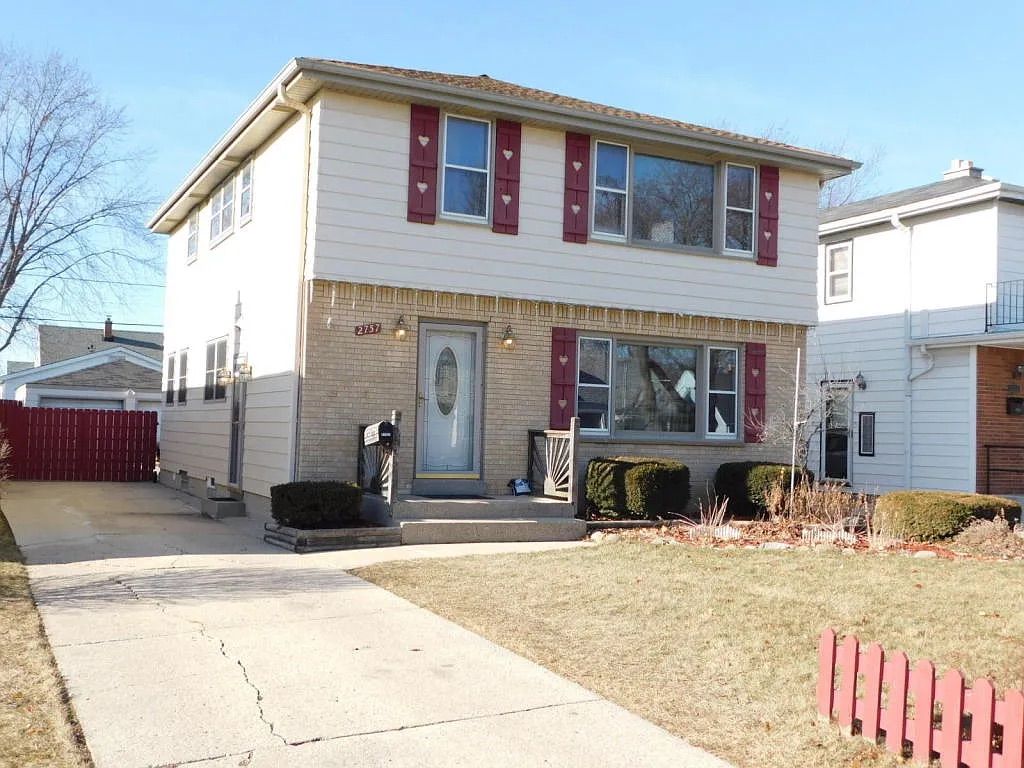
Milwaukee is a duplex city. Whole stretches of Bay View, Riverwest, the South Side, West Allis and Cudahy were built as two-flats, and a large share of them belong to people who never set out to be career landlords. They inherited the building from a parent. They moved across town and kept the old place. They bought one rental years ago and stopped at one. When an owner like that decides they are finally done, the first question is almost always the same: do I have to get the tenants out before I can sell?
No. Wisconsin lets you sell a tenant-occupied property, and the lease simply comes along with the building. What changes is the choreography — who has to be given notice, what has to be handed over at the closing table, and which kind of buyer can realistically close on an occupied two-family. This guide walks through all of it for Milwaukee owners, with the statutes that actually govern each piece.
You are selling the building and the tenancy together. The lease does not evaporate at closing — it transfers, and so do the obligations attached to it, including the security deposits. Get those documented in the offer to purchase and an occupied duplex sale is routine. Leave them vague and you will be arguing about a $900 deposit long after you have spent the proceeds.
The Lease Follows the House, Not You
The governing rule is short. Under Wis. Stat. § 704.09(3), all covenants and provisions in a lease that are not expressly or by necessary implication personal to the original parties are enforceable by or against the successors in interest of any party to the lease. Translated out of statute-speak: when you sell, the buyer steps into your shoes as landlord, and the tenant's rights ride along with the building.
Two practical consequences follow from that one sentence.
- A tenant with a fixed-term lease keeps possession through the term. Selling the building is not a reason to end a lease early, and no buyer can force that outcome either.
- The tenancy becomes part of what you are selling. A good tenant paying market rent on a signed lease is genuinely worth something to an investor. A tenant three months behind, with no lease anyone can find, is worth less than nothing — the buyer prices in the cost of dealing with it.
That second point is where most Milwaukee duplex owners lose money without realizing it. The building is not the only thing being appraised. The paperwork is too.
What Actually Changes Hands at Closing
An occupied sale has a second checklist running alongside the normal real estate one. Before you sign anything, gather:
- The signed leases for both units — including any addenda, pet agreements, or month-to-month conversions.
- Security deposit amounts and the dates they were collected, plus where the money actually is.
- The check-in sheets documenting each unit's condition at move-in.
- A rent ledger showing what has been paid and what has not.
- Copies of any notices you have served and any repair requests still open.
Security deposits deserve their own paragraph, because they are the item that most often gets waved off and then bites. Wisconsin's rule is that a landlord must deliver or mail the full deposit, less any amounts lawfully withheld, within 21 days after the tenant vacates (ATCP 134.06(2)). Whoever is holding that money when the day arrives is the one who owes it. There is no statute that automatically moves a deposit from seller to buyer at a closing — so it has to be handled in the offer to purchase, normally as a credit to the buyer on the closing statement, with the amounts and dates spelled out. Handle it there, in writing, and the issue is closed. Handle it in a text message and it is not.
Rent gets prorated the same way taxes do: whoever owns the building on a given day is entitled to that day's rent. Any rent collected for the month of closing is split at the table.
Showings Run on a 12-Hour Clock
This is the rule that surprises owners who have never sold an occupied building, and it is the reason listing a tenant-occupied duplex on the open market takes longer than listing an empty one.
Under ATCP 134.09(2)(a)1., a landlord may enter a rented unit to inspect the premises, make repairs, or show it to prospective tenants or purchasers as authorized under Wis. Stat. § 704.05(2) — and only for the amount of time reasonably required to do so. ATCP 134.09(2)(a)2. then defines advance notice as at least 12 hours, unless the tenant, on being told about the proposed entry, agrees to a shorter period.
On a duplex, a single showing usually requires notice to both tenants, and a Saturday of back-to-back appointments has to be scheduled around whatever the tenants agree to. You cannot let a buyer's agent in on twenty minutes' notice because the lockbox was convenient. Keep the relationship civil while the building is on the market — a cooperative tenant is worth more to your sale than any staging you could pay for.
If You Want It Empty: Month-to-Month vs. a Lease With Time Left
Some owners decide the cleanest exit is a vacant building sold to an owner-occupant. That is a legitimate choice, but the rules are specific and the economics are worse than people expect.
For a month-to-month tenancy, Wis. Stat. § 704.19(3) requires at least 28 days' notice, and § 704.19(2)(b)1. provides that a periodic tenancy can be terminated by notice only at the end of a rental period. So both the length of the notice and the day you serve it matter. For a fixed-term lease, there is no equivalent lever — the term runs to its end date, and deciding to sell does not shorten it.
Then run the numbers before you serve anything. An empty duplex still costs you heat, insurance, and property taxes every month, you have lost the rent that was covering them, and turning over units in Milwaukee's older housing stock is rarely a weekend of paint and carpet. Meanwhile, whatever the units look like once they are empty is what a buyer's appraiser will see. If the honest answer is that both halves need work you are not going to fund, emptying the building has not solved your problem — it has just made it more expensive to hold. Our breakdown of selling as-is versus renovating first in Milwaukee runs that math repair by repair.
One more thing, said plainly: notice rules, retaliation rules, and the eviction process are technical, and self-help — changing locks, shutting off utilities, hauling belongings out — is never the answer, no matter how far behind a tenant is. Talk to a Wisconsin landlord-tenant attorney about your specific tenancy before you serve anything.
Milwaukee's Point-of-Sale Rule Catches Almost Every Landlord
Many Milwaukee landlords find out about this one only after they have a buyer. Inside the City of Milwaukee, a one- or two-family building that the owner does not live in needs a Certificate of Code Compliance when it is sold, and a rented-out duplex fits that description anywhere in the city. Owner-occupants are not automatically off the hook either. If you live in one unit and rent the other, whether the rule reaches you depends on whether your block sits in one of the city's designated code compliance areas.
The certificate comes after a city inspection, and the inspection fee can end up on the tax bill. The city's guidance splits the job: you, as seller, tell buyers the requirement applies, and the buyer is the one who gets the certificate. Sales to government agencies and court-supervised sales by a trustee are the usual exceptions.
For a landlord that means a city inspector will be inside both units before the deed changes hands, and that visit tends to find whatever earlier complaints did not. Our guide to selling with code violations goes deeper on orders to correct and the charges that can follow. The Department of Neighborhood Services can confirm how the rule applies to your address at (414) 286-3838; call before you sign anything.
The Condition Report — Yes, a Duplex Counts
Chapter 709 of the Wisconsin Statutes covers buildings with one to four dwelling units that have been lived in, so a two-family is covered. For a landlord the timeline looks like this:
- Your completed Real Estate Condition Report has to reach the buyer within 10 days of an accepted offer.
- Miss that, and the buyer gets 2 business days after the 10-day window to back out and recover their deposit.
- Some sellers are exempt, including fee-exempt transfers and personal representatives, trustees or conservators who never lived in the building. An inherited duplex can therefore follow different rules.
The landlord-specific trap: you are disclosing what you know about both units, including things a tenant reported to you, not just the half you have walked through recently. If the upper unit's tenant has been emailing you about a bathroom leak for a year, that is knowledge. Selling "as-is" does not switch the report off — as-is describes what you are willing to repair, while the report describes what you know. If the estate side of this applies to you, our Milwaukee probate guide covers how inherited rental property is handled.
The Three Ways Out of a Milwaukee Duplex
Once you decide you're finished being a landlord, there are really only three ways to get the building sold. The right one depends mostly on your leases, your cash and how long you can keep going.
| Option | Best When | The Catch |
|---|---|---|
| Empty it, fix it, list it | You have months, cash, and a building that is basically sound | You carry a vacant duplex the whole time, and turnover in older stock is a renovation |
| List it occupied as an investment sale | Rents are at market and your leases and books are clean | The buyer pool narrows to investors and their lenders, and every showing runs on 12-hour notice |
| Sell direct to a cash buyer, tenants and all | You want the building, the leases, and the deadline off your plate | The price reflects the work and the tenancy you are handing over |
Emptying and listing wins when the building is in good shape and you are not in a hurry. It gets you the widest buyer pool — owner-occupants pay retail, investors generally do not — and on a tidy Bay View or Wauwatosa two-flat that premium is real.
Listing it occupied is the right call when the rents are strong and the paperwork is clean, because then the tenancy is an asset you are selling rather than a problem you are handing over. Be realistic about the friction, though: you are marketing to investors, their financing has its own standards, and access is on the tenants' schedule. The tax consequences of either sale are their own subject — our guide to the tax strategy for selling a Milwaukee rental covers depreciation recapture, capital gains, and the 1031 option before you commit to a path.
Done Being a Landlord?
We buy duplexes and rentals across Milwaukee & Southeast Wisconsin as-is — tenants in place, deferred maintenance included. No showings marathon, no repairs, no commission.
What a Non-Paying or Uncooperative Tenant Does to Your Sale
A tenant who will not let anyone in is a bigger obstacle to a traditional sale than almost any condition issue. A financed buyer needs an appraisal, and usually an inspection; both require access, and access requires cooperation you may no longer have. Deals on occupied buildings tend to die there — not at the city, not at the title company, but at a locked door on the second showing.
An eviction filed in the middle of a transaction complicates it further: the buyer now has a pending court matter attached to the asset, and their lender may want it resolved before closing. Sometimes finishing the eviction first is genuinely the right sequence. Sometimes it just adds months to a situation you were trying to end.
Either way, understand what a stalled transaction costs on an older duplex. Before we bought a West Allis duplex, its owner had spent three months waiting on a buyer whose loan fell through — and while everyone waited, a leaking radiator brought down the ceiling in the unit below. Time is not neutral in a building like that.
How a Cash Sale Works When the Tenants Stay Put
A direct sale won't suit every two-family. For a landlord who wants out with the tenants still in place, though, it removes most of the friction described above:
- No showings marathon. One walkthrough with proper notice, not eight Saturdays of coordinating two tenants around a lockbox.
- No lender, no appraisal. The access problem that sinks financed deals on occupied buildings is not part of a cash close.
- The tenants stay and we take the lease. You do not have to evict anyone, wait out a term, or empty the building first. We become the landlord at closing.
- Deposits and prorated rent are settled on the closing statement — documented, credited, and done, so nothing follows you afterward.
- Deferred maintenance is ours. The roof, the furnaces, the knob-and-tube, the basement — we price it, we fix it, you do not.
- You can pick the closing date. If you need time yourself, that is workable too: a converted Milwaukee duplex we bought closed first and let the owner move afterward, on her own schedule, after a year-long listing had gone nowhere.
We will also tell you when it is not the right move. If both units are in good shape, your leases are clean, and you can wait out a normal marketing period, listing will usually net you more — and we would rather say so than waste your time. To check our number against a listing, read how we build a cash offer and look over the side-by-side comparison of selling options.
And if the building came to you through an estate, the tenancy is often the least of it. We coordinated with heirs and cleared clouded title on an estate duplex in West Allis that had sat vacant for months while probate stalled — that kind of thing is normal work for us, not a complication.
Ready to hand over the keys? We buy occupied duplexes and rentals in Milwaukee, West Allis and the nearby suburbs. Our sell-your-rental page explains how a landlord exit works with us, the FAQ page covers the quick logistics including tenant-occupied purchases, and you can reach us directly at (414) 400-6116.